
The RS allows the regulator, innovators, financial service providers and customers to conduct field tests to collect evidence on the benefits and risks of new financial innovations, while carefully monitoring and containing their risks.

Market benchmark BSE Sensex rallied 635 points to 59,942 in the opening trade of the special Muhurat session on Monday to mark the beginning of Hindu Samvat year 2079. The 30-share index was trading higher by 635.12 points, or 1.07 per cent, at 59,942.27 in the first few minutes of trade. Similarly, the broader NSE Nifty surged 192.20 points or 1.09 per cent to 17,768.50.

The finance ministry expects a broad-based moderation in inflationary pressures on the back of an anticipated reduction in food prices as a result of the uptick in summer sowing. The retail inflation rate remained stubbornly clung to the 5 per cent mark in seven of the past eight months. "Core inflation is trending downwards, indicating a broad-based moderation in price pressures... Driven by strong domestic growth and benign global commodity prices, core inflation is declining continuously.

'The last year's growth is a foretaste of things to come in the retail credit market.'

Equity markets will look for directions from global trends, ongoing quarterly earnings and investment patterns of foreign institutional investors (FIIs) in a holiday-shortened week ahead and may encounter volatility amid the scheduled monthly derivatives expiry, according to analysts. Equity markets will remain closed on Wednesday on account of 'Republic Day'. "This week is a holiday-shortened one and it's going to be critical due to the list of events and data that are lined up.

Macroeconomic data announcement, Omicron situation and global trends will be the major driving factors for the equity market in the first week of the new year 2022, according to analysts. In what turned out to be a historic year, the Indian stock indices went past multiple milestones and the 30-share Sensex made an annual gain of 10,502.49 points or 21.99 per cent in 2021. Religare Broking Vice-President (Research) Ajit Mishra said, "This week marks the beginning of a new month and participants will be closely eyeing some crucial high-frequency data like monthly auto sales, India manufacturing PMI and India services PMI. "Besides, updates on the COVID-19 situation and performance of global markets will also be critical."

The organised retail sector clamors for Industry Status, removal of service tax on rentals, permit FDI in retail and usher in GST regime

The changes in the domestic and global economy following the outbreak of the Covid-19 pandemic are altering the corporate profit league table in India. Reliance Industries (RIL), which topped the India Inc profit chart for more than a decade, lost out to State Bank of India (SBI) in the 2023-24 (FY24) April-June quarter (first quarter, or Q1). India's biggest lender reported a consolidated net profit (adjusted for exceptional gains and losses) of Rs 66,860 crore during the trailing 12-month (TTM) ended in June this year, ahead of RIL's TTM adjusted net profit of Rs 64,758 crore in the quarter.

Reliance Industries Ltd on Friday reported a 27 per cent jump in its September quarter net profit as earnings from the oil and gas business rebounded, and a pick-up in fashion and grocery helped boost retail revenues. The oil-to-retail-to-telecom conglomerate's consolidated net profit of Rs 17,394 crore, or Rs 25.71 per share, in July-September - the second quarter of the current 2023-24 fiscal - was 27.3 per cent higher than Rs 13,656 crore, or Rs 19.92 a share, earning a year back, the company said in a statement. The net profit was also higher quarter-on-quarter compared to Rs 16,011 crore earnings in the preceding three months ended June 30.

The K-shaped economic recovery in India from the pandemic slowdown shows in corporate results as well. The automobile sector, which represents big-ticket consumption, continues to do well and has increased its share in corporate revenues and profits while fast-moving consumer goods (FMCG) companies that sell low-ticket consumer goods are struggling with poor sales and earnings growth. The share of the automobile sector, including makers of auto ancillaries, in corporate net sales rose to a 10-quarter high of 10.05 per cent during July-September 2023 (Q2FY24) from 8.94 per cent a year earlier and 9.75 per cent in Q1FY24.

The dealers operating in the space have jumped nearly three times over the past two years.

A majority of the Indian consumers are bullish about their financial situation in the next one year, but have raised concerns over rising cost of goods and services, which is affecting their purchasing decisions, according to an EY report. Moreover, uncertainty around managing rising living costs is driving over 80 per cent in India to save more money, said the findings of the ninth edition of the EY Future Consumer Index for India. The Index for India reaffirms the "positive outlook" of the Indian consumers as 77 per cent expect positive changes in the financial situation, in the next one year.

Investors' wealth climbed Rs 3.20 lakh crore as markets staged a smart comeback on Wednesday after falling in the last eight trading sessions. The BSE Sensex rallied 448.96 points or 0.76 per cent to settle at 59,411.08. During the day, it jumped 513.33 points or 0.87 per cent to 59,475.45.

Apollo HealthCo Ltd (AHL), a subsidiary of Apollo Hospitals Enterprise (AHEL), on Friday entered into a binding agreement to raise equity capital of Rs 2,475 crore from Advent International (Advent), one of the world's largest private equity (PE) players. The transaction will also see the merger of two units under Apollo Healthco - its wholesale pharma distribution unit Keimed Pvt Ltd and online healthcare business Apollo 24'7. The merger will take place in a phased manner over the next 24-30 months.

Defying trends, the country's largest private sector lender, HDFC Bank, has shifted its asset mix significantly towards high-rated segments. As a result, its wholesale-to-retail mix has tilted heavily in favour of wholesale, even at the cost of margins. Further, it is even looking to ramp up its branch network, with an aim to service clients within a 1-2 km radius rather than the current 5-6 km radius.

From the Sensex pack, Infosys tanked over 8 per cent after the company reported a lower-than-expected 11 per cent rise in net profit for the June quarter and delivered a shocker as it slashed its FY24 growth outlook to 1-3.5 per cent on delayed decision-making by clients amid global macro uncertainties. Hindustan Unilever, HCL Technologies, Wipro, and Tech Mahindra were the other major laggards. On the other hand, Larsen & Toubro rose the most by 3.88 per cent after it bagged an order of worth over Rs 7,000 crore from the bullet train project.

Benchmark equity indices Sensex and Nifty closed higher by more than half a per cent on Wednesday following buying in IT, financial and oil stocks after the RBI slowed down the pace of interest rate hikes. Ending its two-day slide, the 30-share BSE Sensex rebounded by 377.75 points or 0.63 per cent to close at 60,663.79 with 24 of its constituents posting gains. The broader Nifty of the NSE spurted by 150.20 points or 0.85 per cent to settle at 17,871.70, riding on a rally in Adani Enterprises, Adani Ports and HDFC Life.

Digital payments and financial services firm Paytm is likely to allocate shares at the upper price band of Rs 2,150 apiece on November 16 after market regulator SEBI's approval which is expected to come on Monday, sources aware of the development said. Earlier the allocation was expected to take place on Monday and the Paytm Money app also displayed the same.

Salaries in India are expected to increase by 9.5 per cent in 2024, slightly lower than the actual increase of 9.7 per cent in 2023, largely in response to market dynamics, according to global professional services firm Aon plc. According to the firm's annual salary increase and turnover survey 2023-24 India, that analysed data across 1,414 companies from almost 45 industries, salary increase in India seems to have stabilised at high single digits, after the post-pandemic high increments in 2022. "The projected increase in salaries in the Indian formal sector indicates a strategic adjustment in response to the evolving economic landscape.

RBI's exercise will take into account standards of governance, the viability of the payment bank (PB) business model, and changes, if any, if needed.

Announcement of macroeconmic data such as industrial production and inflation, the US Federal Reserve's interest rate decision along with trends in global equities would dictate movement in the stock market this week, analysts said. Besides, foreign fund trading activity would also guide the trends in equities. "All eyes are now on the US Fed policy outcome for cues, which is scheduled on June 14. In the following sessions, the European Central Bank (ECB) and Bank of Japan (BoJ) will also announce their policy decisions.

Investors became poorer by over Rs 4.47 lakh crore on Friday as markets faced severe drubbing, mirroring weak trends in global equities. The 30-share BSE benchmark dived 866.65 points or 1.56 per cent to settle at 54,835.58. During the day, it tumbled 1,115.48 points or 2 per cent to 54,586.75.

Stories are legion about the Karatmeter's use at that time. Hundreds of people standing in queue for testing, customers breaking down after discovering the actual purity of their jewellery and then becoming irate about the jeweller who had gypped them, the local jewellery industry leaning heavily on the Tanishq franchisees to desist from using it, some jewellers even threatening violent action.

Among the Sensex firms, Wipro, Axis Bank, Titan, UltraTech Cement and HDFC Bank, HDFC, HCL Tech and Reliance were the gainers.

Amazon has also signed a term sheet with Kishore Biyani-led Future group to invest $600 million to $700 million for a 12 to 15 per cent stake in the retail giant, it is learnt.

Ahead of the end of his term as the Kotak Mahindra Bank's chief executive and managing director, Uday Kotak has said he will be a "non-executive board governance member and a strategic shareholder" going ahead. In the private sector lender's annual report, the last such message from him as the MD and CEO before he relinquishes the position at the end of 2023, Kotak reminisced about the institution's journey, pointing out that Rs 10,000 invested in 1985 is worth over Rs 300 crore today. "Going forward, I see my role as a non-executive board governance member and a strategic shareholder with a long term perspective of nurturing a world class institution," Kotak said in the annual report.

Mukesh Ambani, the patriarch of Reliance Industries (RIL), and Gautam Adani, the chairman of Adani Group of companies, have secured the top positions on the Fortune India Rich List, created in partnership with Waterfield Advisors, with respective wealth of $99.7 billion and $63.71 billion. With a wealth of $34.6 billion, the Mistry family of Shapoorji Pallonji Group holds the third position on the list, while the Poonawalla family, owners of vaccine maker Serum Institute, with a wealth of $32.9 billion, stands fourth. Stockbroker and founder of D-Mart-branded grocery stores, Radhakishan Damani, claims the fifth spot on the India Rich List with a wealth of $23.4 billion

It bought Rs 410 crore of electoral bonds between financial years 2021-22 and 2023-24, but Reliance said the company is not a subsidiary of any Reliance entity.

India's services sector remained in contraction territory for the third straight month in July, as business activity, new orders and employment declined further largely due to the COVID-19 pandemic and local restrictions, a monthly survey said on Wednesday. The seasonally adjusted India Services Business Activity Index rose from 41.2 in June to 45.4 in July, but was stuck in the red due to subdued demand conditions amid the COVID-19 crisis. In Purchasing Managers' Index (PMI) parlance, a print above 50 means expansion, while a score below 50 denotes contraction.
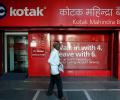
Kotak Mahindra Bank on Saturday reported a 25 per cent growth in its March quarter net profit at Rs 5,302 crore, limited by a drop in the core income due to narrow interest margins. On a standalone basis, the city-headquartered lender's Q4 net profit grew 18 per cent to Rs 4,133 crore. The FY24 consolidated net profit grew 22 per cent to Rs 18,213 crore.

Investors' wealth eroded by a massive Rs 8,21,666.77 crore on Monday as the market saw a massive sell-off not seen in many months. The BSE benchmark Sensex plunged 1,170.12 points or 1.96 per cent to close at 58,465.89. This is the worst single-day drop for the gauge in over seven months. This was also the fourth straight session of decline for the Sensex.

Benchmark indices fell on Monday with the BSE Sensex declining 306 points, mainly dragged down by Reliance Industries. Foreign funds outflow also added to the overall bearish trend in equities on Monday. The 30-share BSE benchmark fell 306.01 points or 0.55 per cent to settle at 55,766.22. During the day, it declined 535.15 points or 0.95 per cent to 55,537.08. The broader NSE Nifty dipped 88.45 points or 0.53 per cent to 16,631.

Moody's Investors Service on Thursday said loans to retail customers, especially those to low-income borrowers, will remain most affected due to the shock caused by the coronavirus pandemic. Despite the pandemic challenges, asset quality at Indian banks has performed better than expected at the start of the outbreak, Moody's said. "Corporate loans, in particular, have performed well because banks prior to the pandemic had largely provisioned for legacy problem loans and tightened underwriting standards," Moody's vice president and senior credit officer Srikanth Vadlamani said. Addressing an online conference organised by Moody's and its affiliate Icra, Vadlamani said an increase in non-performing loans in both public and private sector banks is subdued.

The third quarter (Q3) of 2023-24 (FY24) has proven to be pivotal, witnessing some startups turning profitable and others enhancing their performance as their businesses finally begin to deliver. Startups like Delhivery, Zomato, PolicyBazaar, Mamaearth, and Nykaa have either become profitable or improved their profit margins in Q3FY24. A renewed focus on profitability, supported by operational efficiencies, expense rein-in, and robust demand during the festival season, has empowered companies to strengthen their performance.
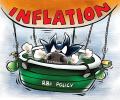
The Reserve Bank of India on Friday raised the retail inflation forecast for 2021-22 to 5.7 per cent due to supply side constraints, high crude oil and raw materials cost. The RBI in June had pegged the retail inflation estimate at 5.1 per cent for the current financial year. The RBI has the mandate to keep inflation in a band of 2-4 per cent, with a tolerance level of 2 per cent on either side.

Ola founder and chief executive officer (CEO) Bhavish Aggarwal will step back from day-to-day operations to focus more on engineering functions, team building, and products, apart from focusing on long-term strategic projects, such as two-wheelers, cars, and innovations in quick commerce and international expansion. "I'll be spending more time with all engineering functions, team building, and on products," said Aggarwal in an internal note, adding, "I'll also be increasing my focus on our longer-term strategic projects, including new two-wheeler products, our car project, innovations in quick commerce, electrifying ride-hailing, our cell research and development (R&D), international expansion, building our Pune technology (tech) centre, and Futurefoundry UK." To drive scale, speed, and quality, Aggarwal said he is expanding Ola Group's chief financial officer (CFO) G R Arun Kumar's role to help him steer 'day-to-day operations' across the group.

NBFCs with a proven track record, supported by the brand values of reputed corporate, can play a key role in bringing the benefits of banking and economy to the underserved and newer segments of India.

Benchmark equity indices Sensex and Nifty reversed their early gains to close lower on Wednesday due to selling in oil & gas, banking and IT stocks amid weak trends in European markets. The 30-share BSE Sensex declined by 372.46 points or 0.69 per cent to close at 53,514.15, extending its falling streak to a third day. The index opened higher and touched the day's high of 54,211.22 amid gains in Asian markets.

L&T Finance CEO interview.

Billionaire Mukesh Ambani's children -- Isha, Akash and Anant -- on Monday were appointed on the board of his energy-to-technology conglomerate Reliance Industries Ltd, in what is seen as a clear path of succession planning at India's most valuable company.
 © 2026 Rediff.com - Advertise with us - Disclaimer - Privacy Policy - Sitemap - Feedback - About us - Terms of use - Grievances